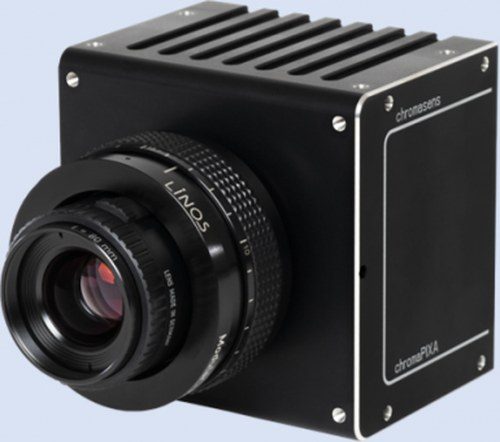
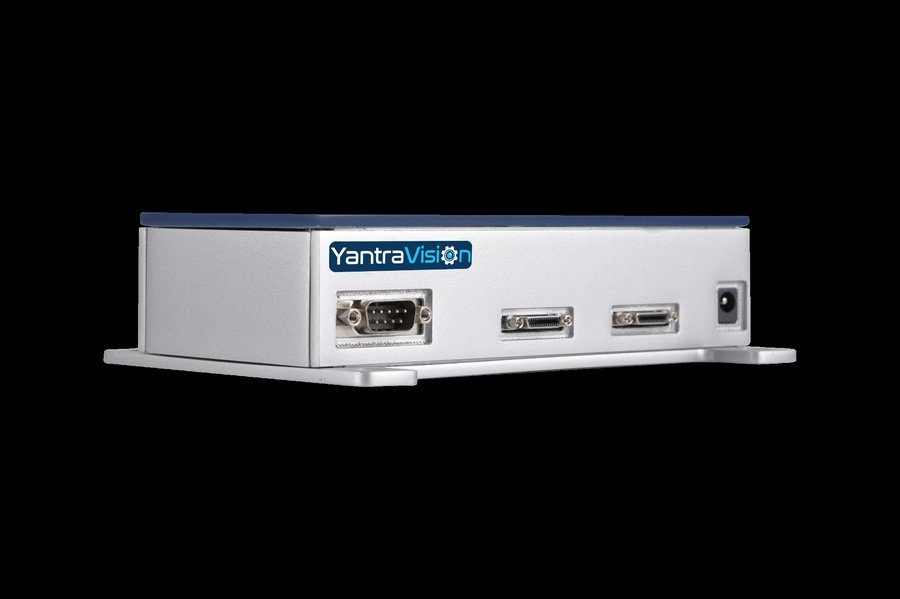
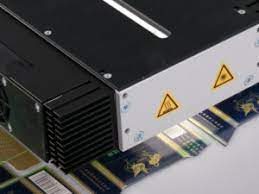
YantraVision combines high-bandwidth line-scan imaging, FPGA acceleration, and AI inference to detect defects down to 1 mm on production lines running at 20 m/s. Built on the AMD Kria™ K26 SOM, the system processes every acquired line with less than 2 ms detection latency while distinguishing true defects and contaminants from natural material variation.
Since 2016, YantraVision has designed and deployed AMD-based machine-vision inspection and sorting systems for industrial lines that cannot slow down: cotton, grain, recycled fiber, pharmaceutical print, and paper. Across these applications, deterministic rules remain effective when defects are visually distinct and process conditions are stable. As inspection targets become smaller and natural material variation increases, however, rules alone cannot always separate a true contaminant or defect from an acceptable variation. YantraVision is addressing that gap by adding AI-based inference to its high-speed imaging and FPGA processing platform.
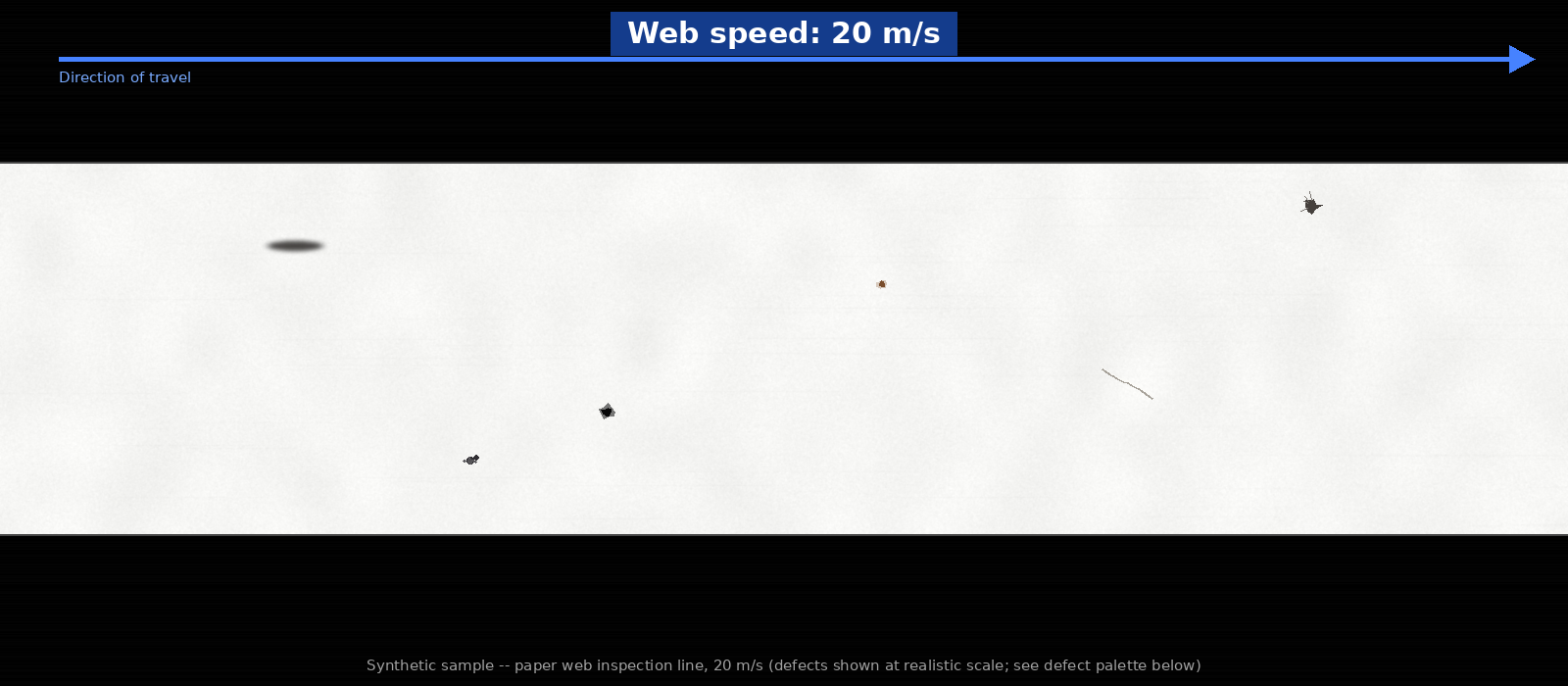
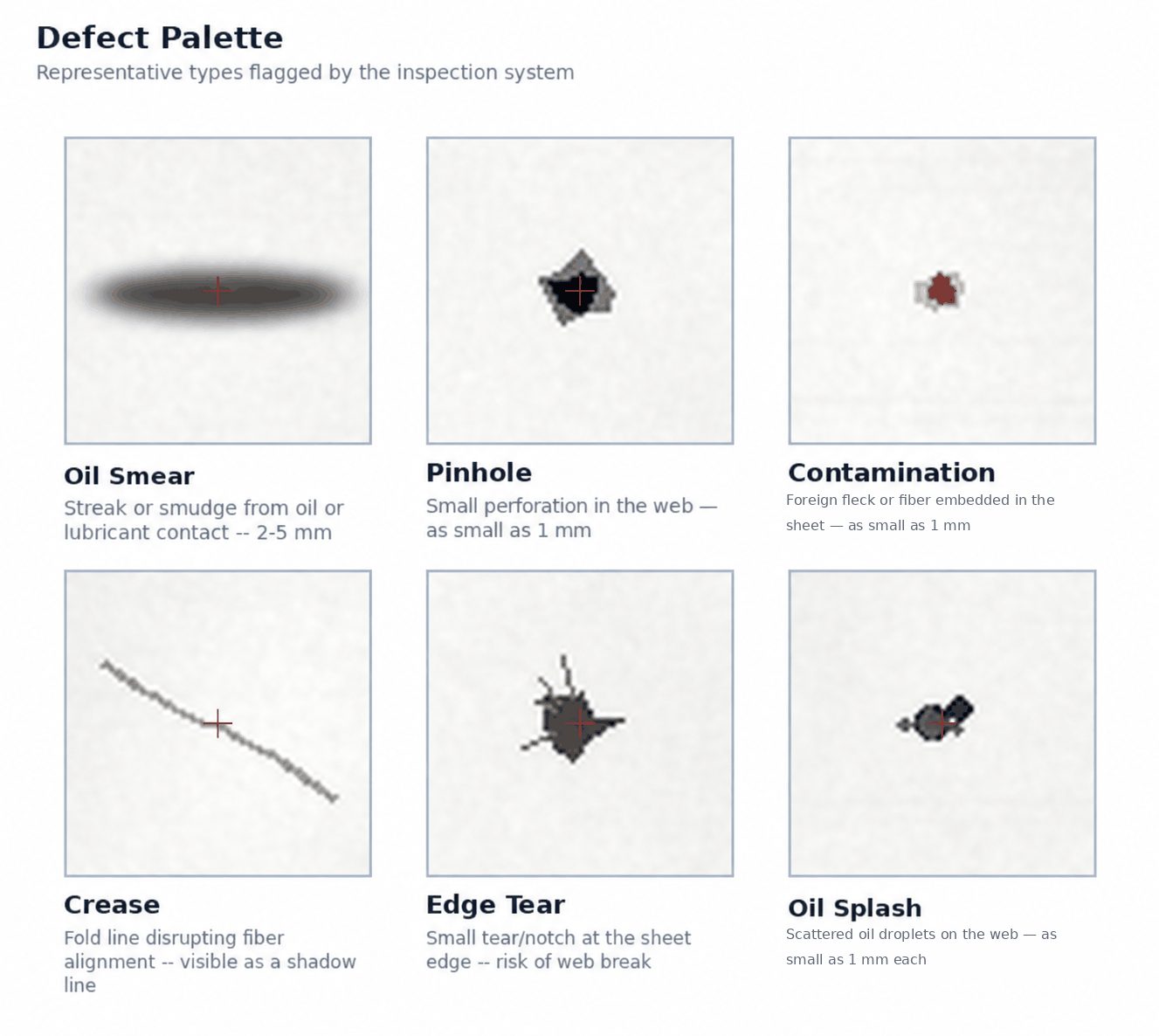
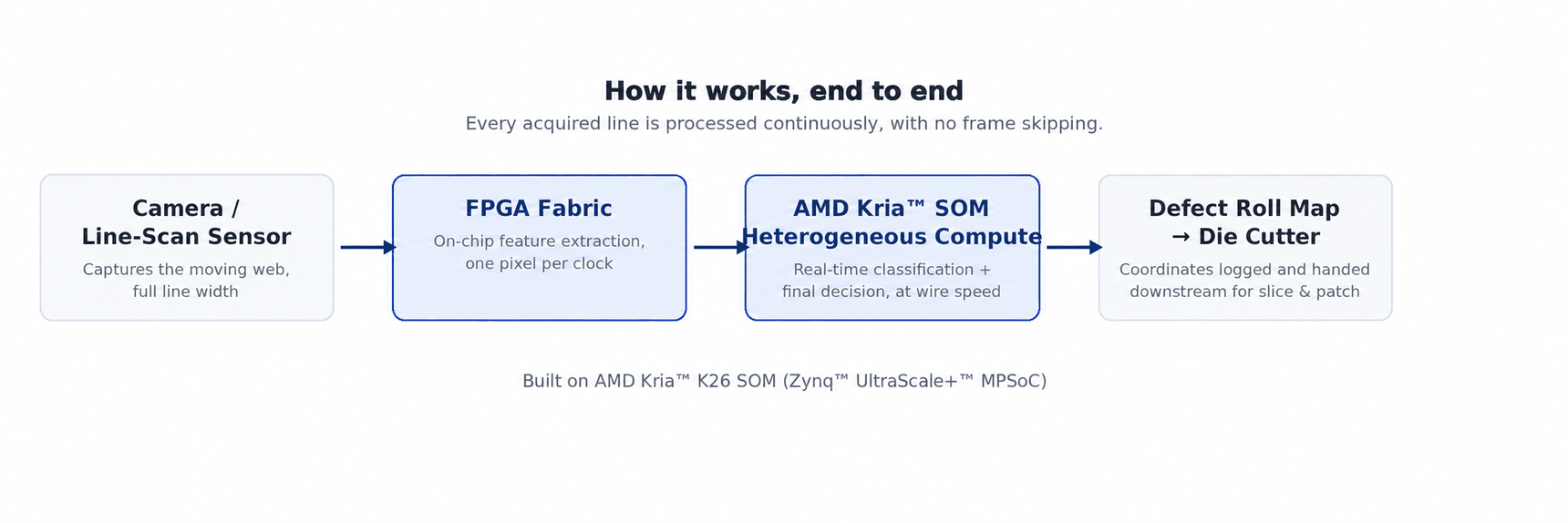
The installed YantraVision system inspects a paper web running at up to 20 m/s, with end-to-end detection latency of less than 2 ms. In the installed system, it detects defects down to 1 mm, including oil smears, oil splashes, pinholes, contamination flecks, creases, and edge tears. Rather than ejecting material in real time, the system records each detected defect's machine- and cross-web coordinates in a defect roll map, enabling the downstream die cutter to locate, remove, and patch the affected section.
The application presents two tightly coupled engineering problems. First, the imaging system must capture enough spatial detail to reveal small defects while the web moves at production speed. That creates a high-bandwidth data stream that must be acquired and processed continuously.
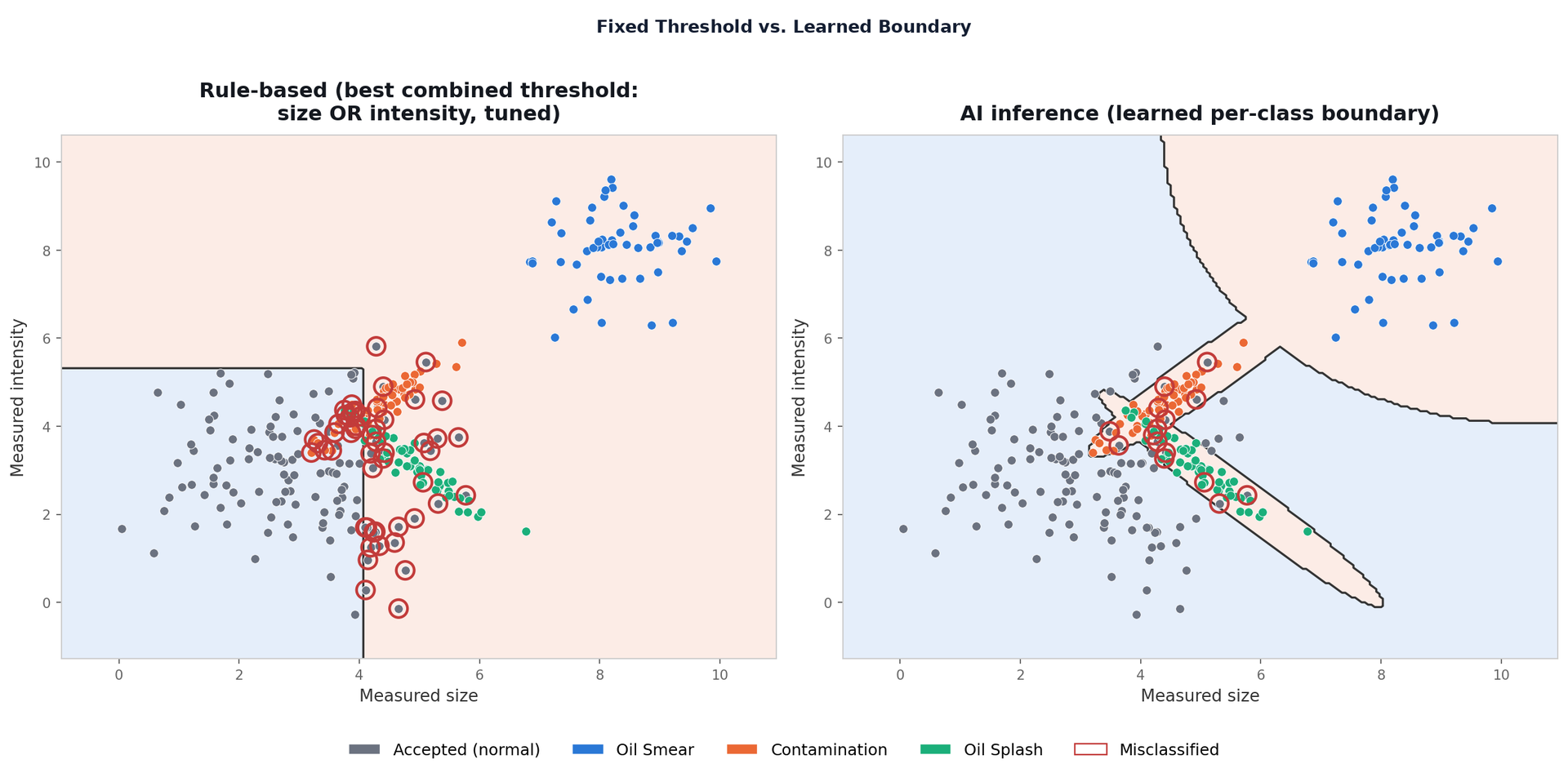
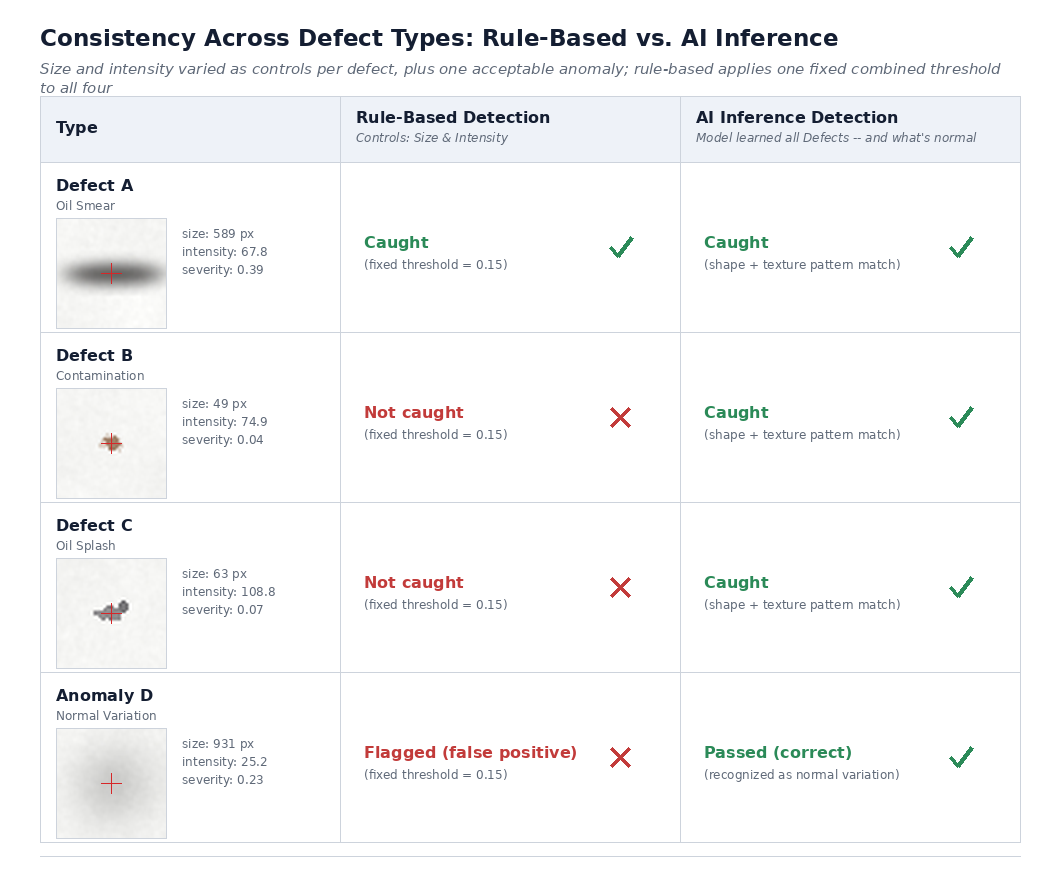
Second, acquiring the image is only half the problem. Natural variations in the paper can overlap with defects in size, color, intensity, or texture, making fixed thresholds prone to misses and false positives. AI inference provides a learned decision boundary, but it is also compute-intensive. YantraVision therefore had to solve both constraints together: sustain the image bandwidth and complete inference within the available time budget.

YantraVision built the Falcon Compute platform to perform deterministic, low-latency image processing in FPGA fabric at line speed. Its rules engine continues to provide fast, repeatable detection for well-defined conditions. The AI upgrade addresses the harder cases, where defects overlap with normal web variation and cannot be separated consistently by fixed thresholds alone.
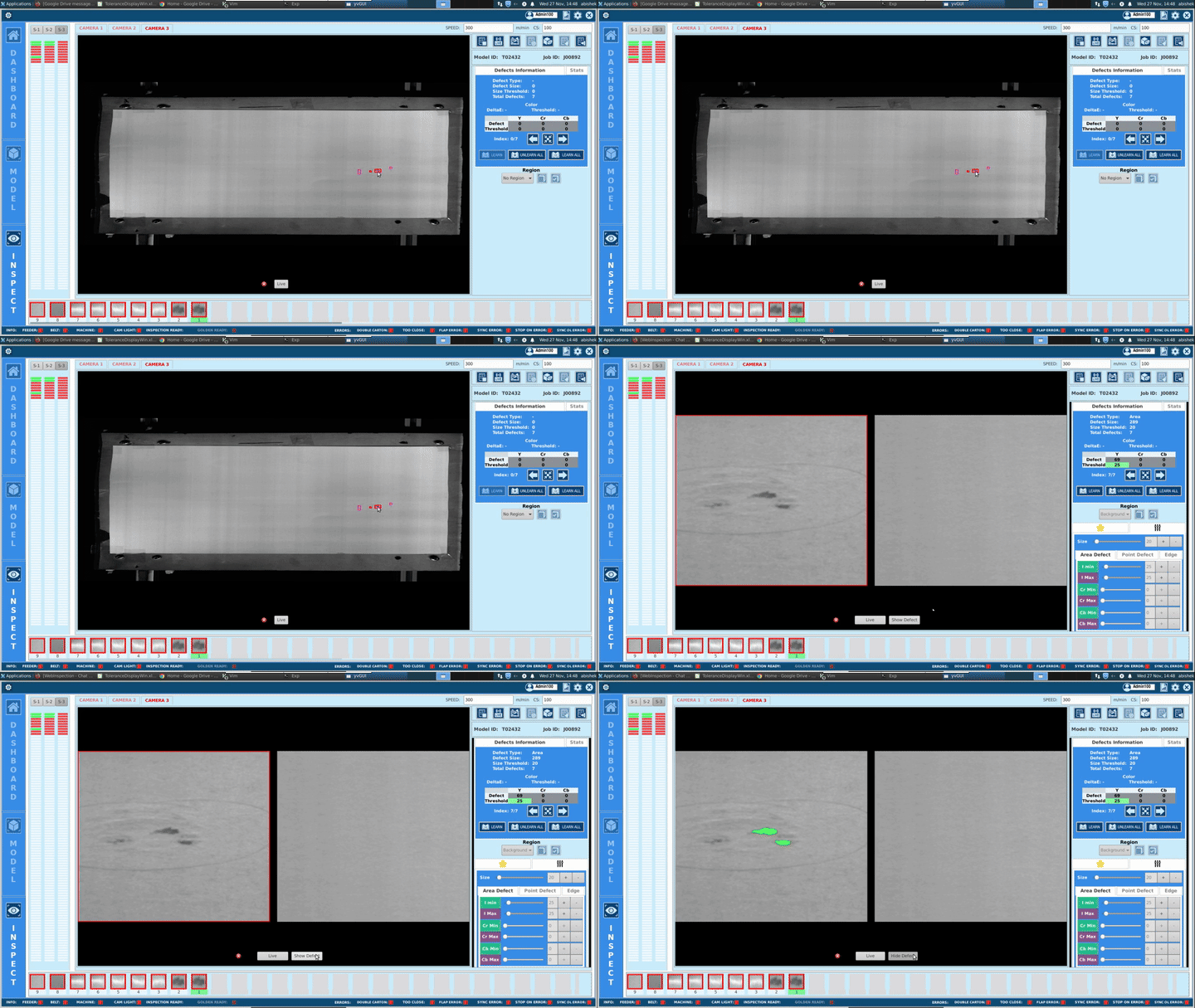
Comparison of fixed and learned decision boundaries using the same production data.
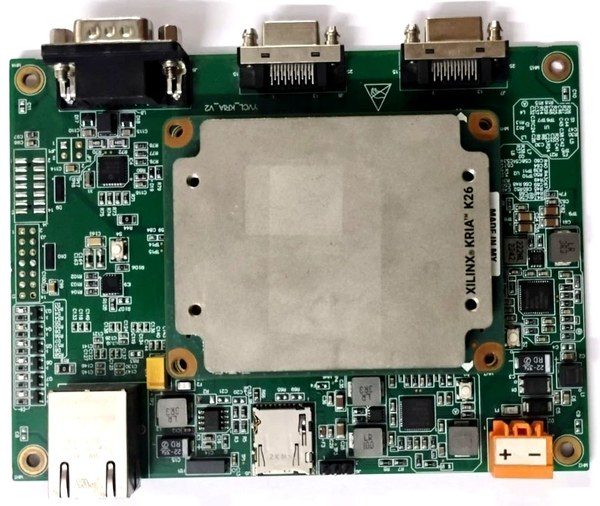
YantraVision deployed the upgraded inspection pipeline on the AMD Kria™ K26 SOM, based on the Zynq™ UltraScale+™ MPSoC architecture. FPGA logic handles high-throughput acquisition and feature extraction, while the processing system performs AI-based classification. This heterogeneous design evaluates every acquired tile continuously, without frame skipping. The learned classifier distinguishes defects from normal variation and identifies the defect type, enabling the appropriate downstream action instead of treating every anomaly alike.
In the installed system, the complete imaging and inference path operates at line speed on the AMD Kria platform. Each detected defect is recorded in the roll map at its machine- and cross-web coordinates, enabling the downstream die cutter to act on the correct section of material. This supports continuous inspection, defect classification, and defect-specific downstream handling.
At 20 m/s and 42,000 lines/s, the machine-direction sampling interval is approximately 476 µm per line, providing just over two line samples across a 1 mm feature. Actual detectability also depends on contrast, optics, illumination, exposure, and feature orientation.
For OEMs developing inspection equipment, YantraVision can adapt the platform to new materials, defect classes, imaging configurations, and production speeds, while integrating application-specific cameras, lighting, interfaces, and downstream controls.
Discuss Your ApplicationExplore YantraVision